

Short answer: because they use search completely differently. The Free tier relies heavily on “best of” queries and classic listicles. Paid ChatGPT has a shortlist of brands ready and pulls data from the web to verify them. The optimization starts with checking the first round of fan-out queries on the paid plan and figuring out how to make sure your brand is in the search results.
Now the long answer.
Study design: high-value prompts only, fully auditable
The common and fair objection to prompt tracking: nobody knows whether the prompts are real.

Same with AEO studies, especially ones built on tens of thousands of prompts. Those may well be artificial constructs.
To mitigate that, I based my study on a narrow, specific and commercially valuable prompt set. I used the Ahrefs keyword database for 5 categories: Autos, Beauty & fitness, Business, Finance, Home & garden. From each I selected 20 keywords with these criteria:
At least 1000 search volume.
At least $1 CPC.
Intents: non-local, non-branded, commercial, transactional.
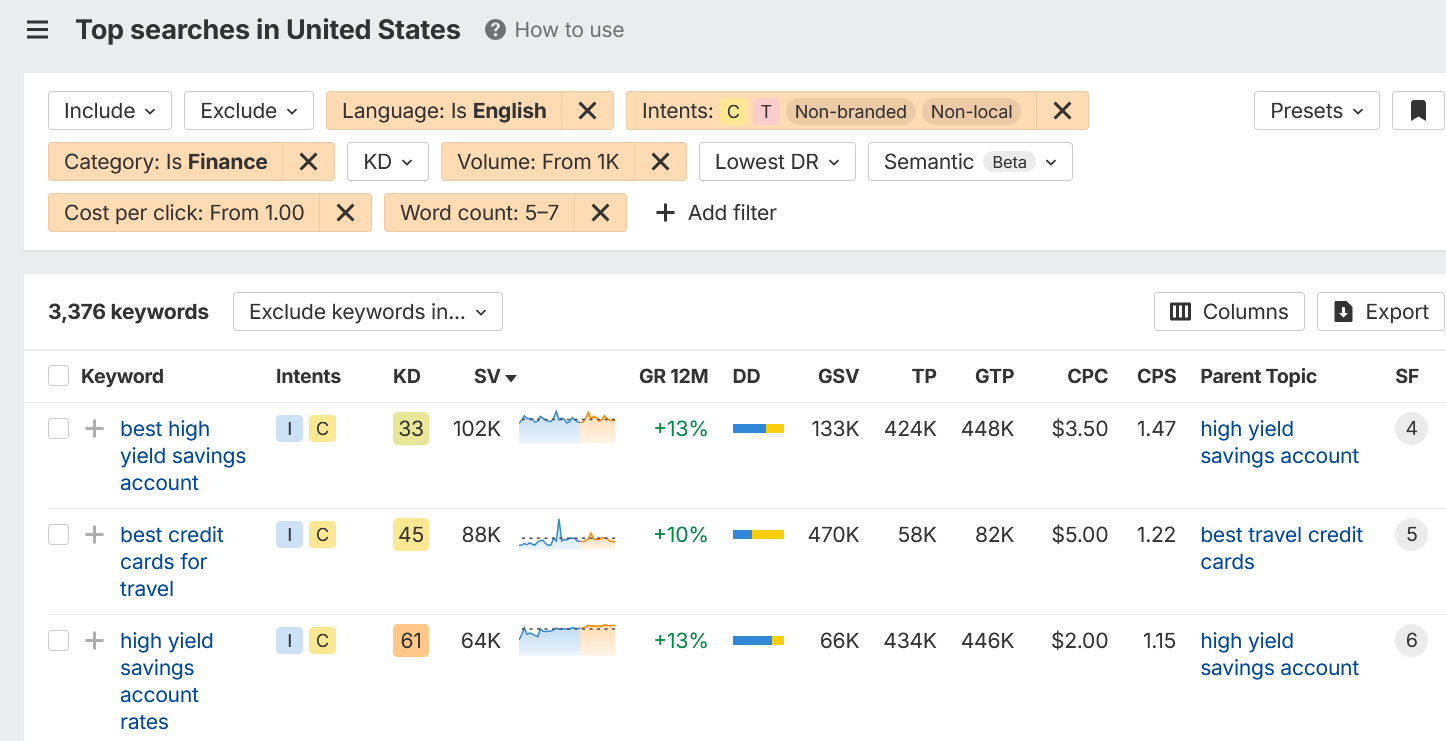
In short, these are the juiciest, close-to-bottom-of-funnel keywords, the ones that bring real money if you rank high for them in Google. Note the additional filter: 5 to 7 words, so they are also close to the natural language of prompts.
I ran these 100 prompts with ChatGPT Free (gpt-6), Plus (the default gpt-6-thinking with medium effort) and API and recorded answers, citations and technical data. The extraction of brands and the classification of queries and sources were done with the Claude API and sanity-checked selectively by hand.
The research treats self-reported fan-outs and fan-outs grounded in network data equally. I have plenty of evidence that self-reported queries are real. I shared some in my posts about hidden fan-outs and API fan-outs.
Here’s the full dataset and comparisons: https://io.trudov.com/chatgpt-search-trends/.
Finding #1: the difference in results between Free and Plus is large
For the same prompt, Free and Plus agree on 49% of the brands they name.

Note: the dataset is built on one run per prompt, so part of that gap is run-to-run noise. On the other hand, there’s a fundamental difference in how these answers are generated (see below), so the gap is likely to persist. I also saw a similar picture in the test runs I did while building the scripts.
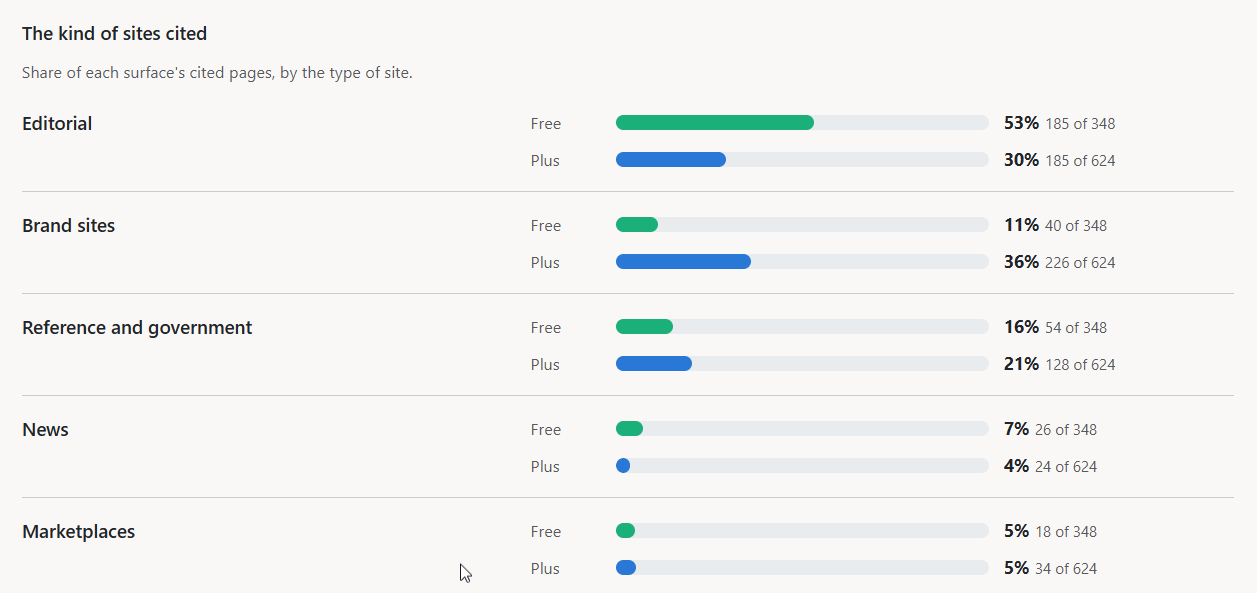
Free cites more editorial sites, Plus leans toward brands’ own sites.
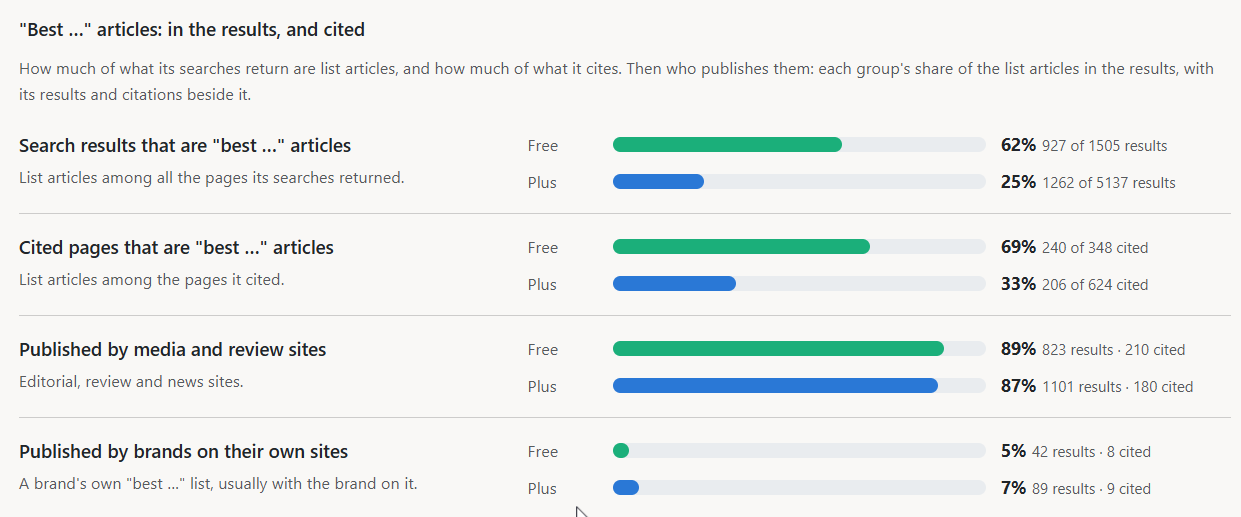
Free gives twice as much attention to listicles, both in search results and in cited sources:
Now the important part: what’s the mechanism behind these differences.
Finding #2: Free searches the web for straight answers. Plus already has an answer and uses live data to verify and complete it
When we look at the internal machinery behind the answer, the difference is even more apparent.
The obvious difference is in thinking effort and the number of searches and search rounds. For the 100 prompts Plus ran 537 queries vs 225 on Free; only 4 prompts triggered a second search round on Free vs 24 on Plus.
The essential difference is in the types of queries used:
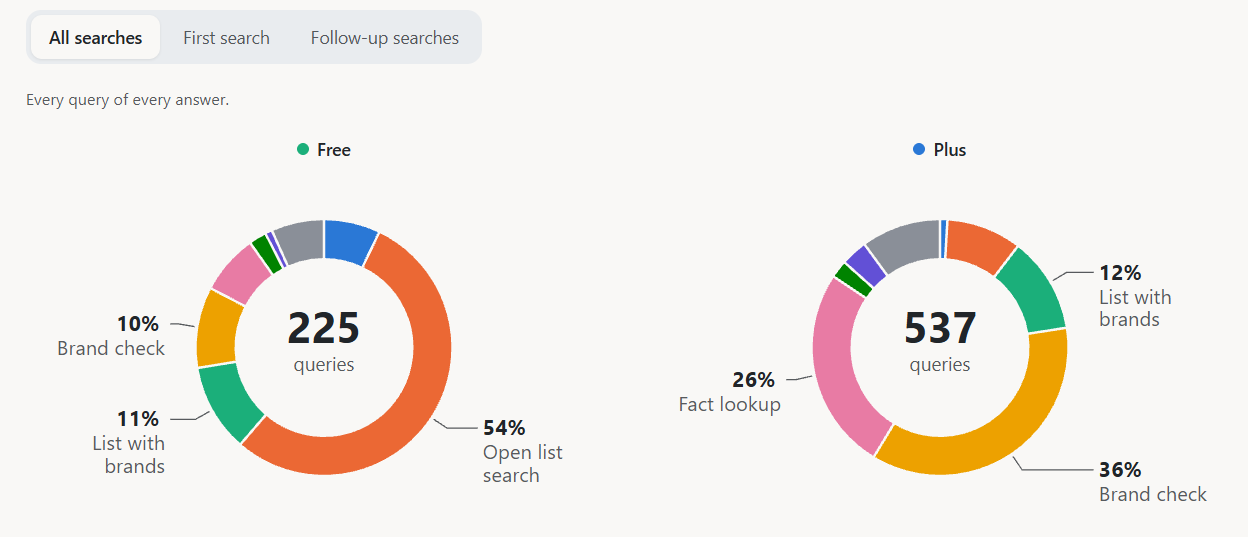
54% of Free searches are open list searches, i.e. queries like “best of”, essentially a rephrasing of the prompt. Only 9% of Plus searches are like that. More than half of Plus fan-outs are about a specific brand or product1. There are plenty of other stats pointing in the same direction; you can find them all here. To understand the general idea and use it in practice you can just look at a typical example:
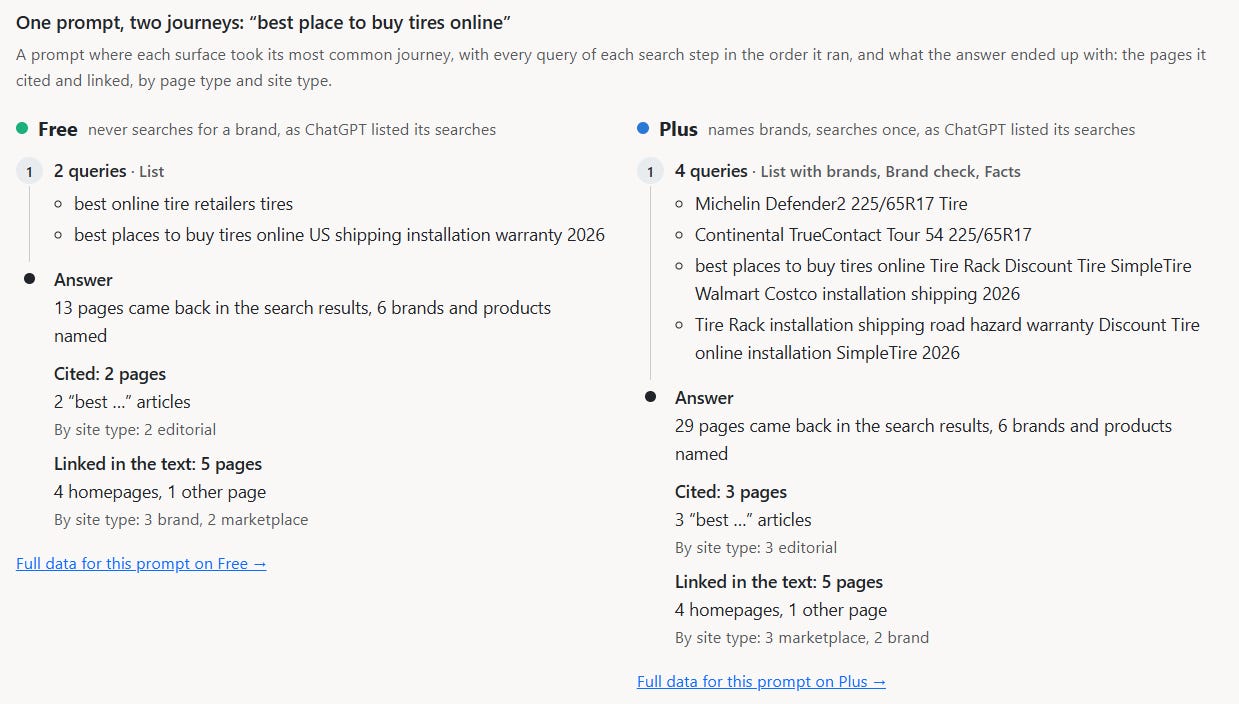
Free searched twice: a) basically the prompt itself, b) a variation with important details to check. Plus used 4 fan-outs. 3 of them check specific brands or products, and only one is a version of the user’s query. But even this variation carried 5 brand names, narrowing the search.
Here is a more detailed picture of how Plus handled this prompt:
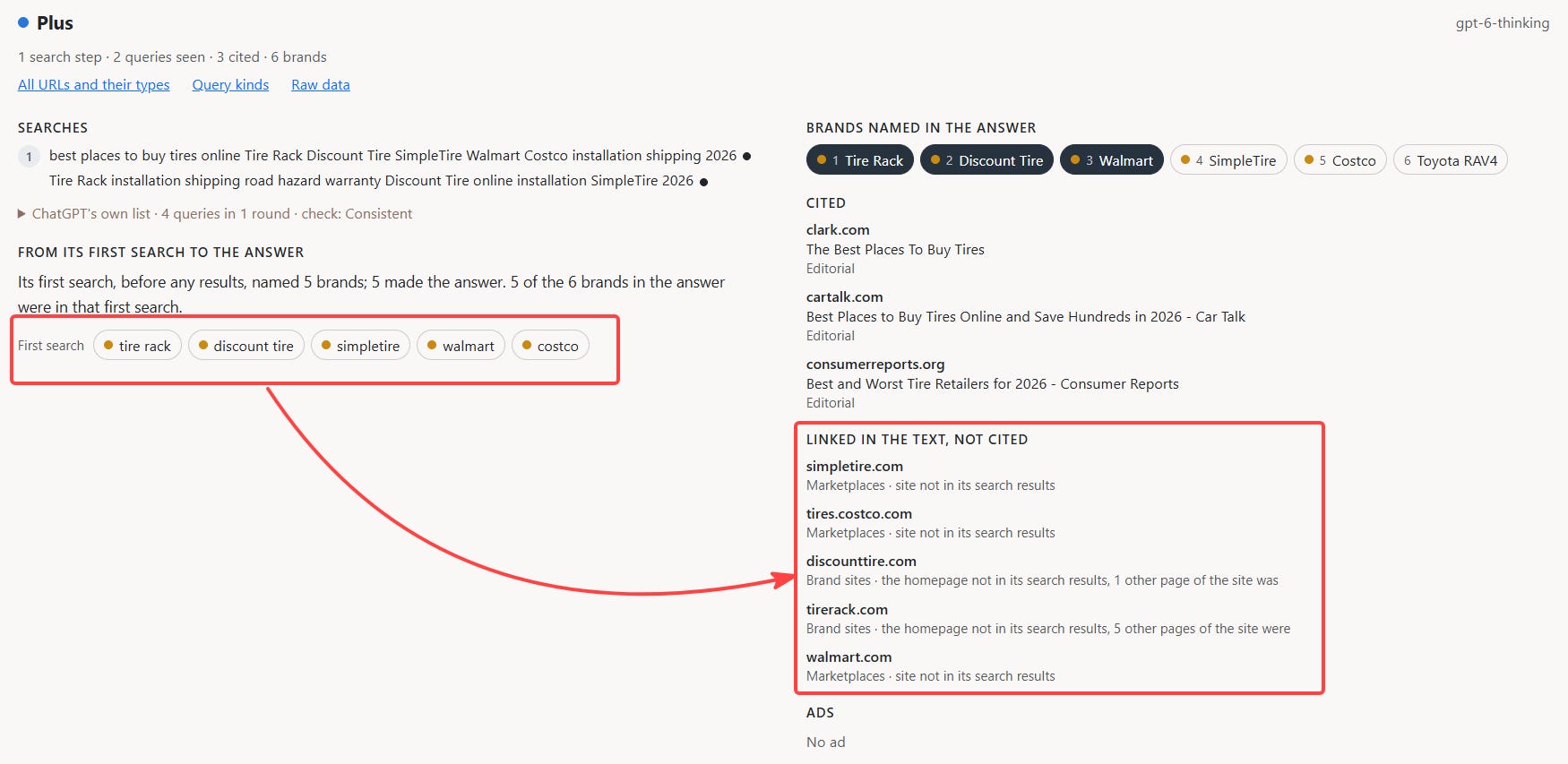
All 5 brands that were recommended (linked) were already the model’s first choice. It checked them against listicles and their own websites (for example it checked tire protection certificates on discounttire.com) and allowed all of them into the answer.
It looks like a pretty depressing picture for AEO: there are few openings to insert your own brand. But the checking is not a formality. ChatGPT does pick new brands at later stages of crafting the answer, just not for all prompts:
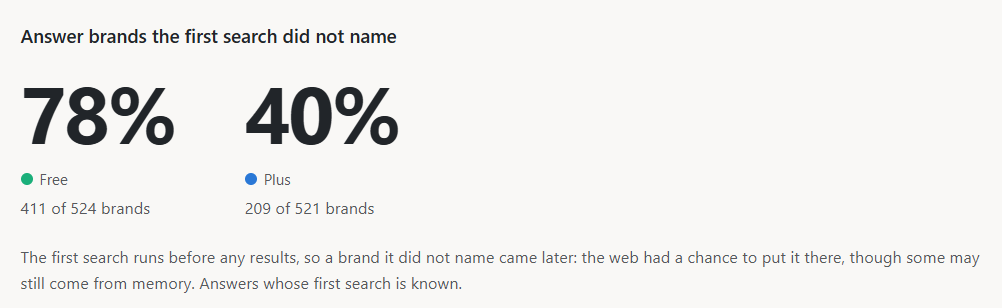
Brands are routinely being dropped and added in the process:
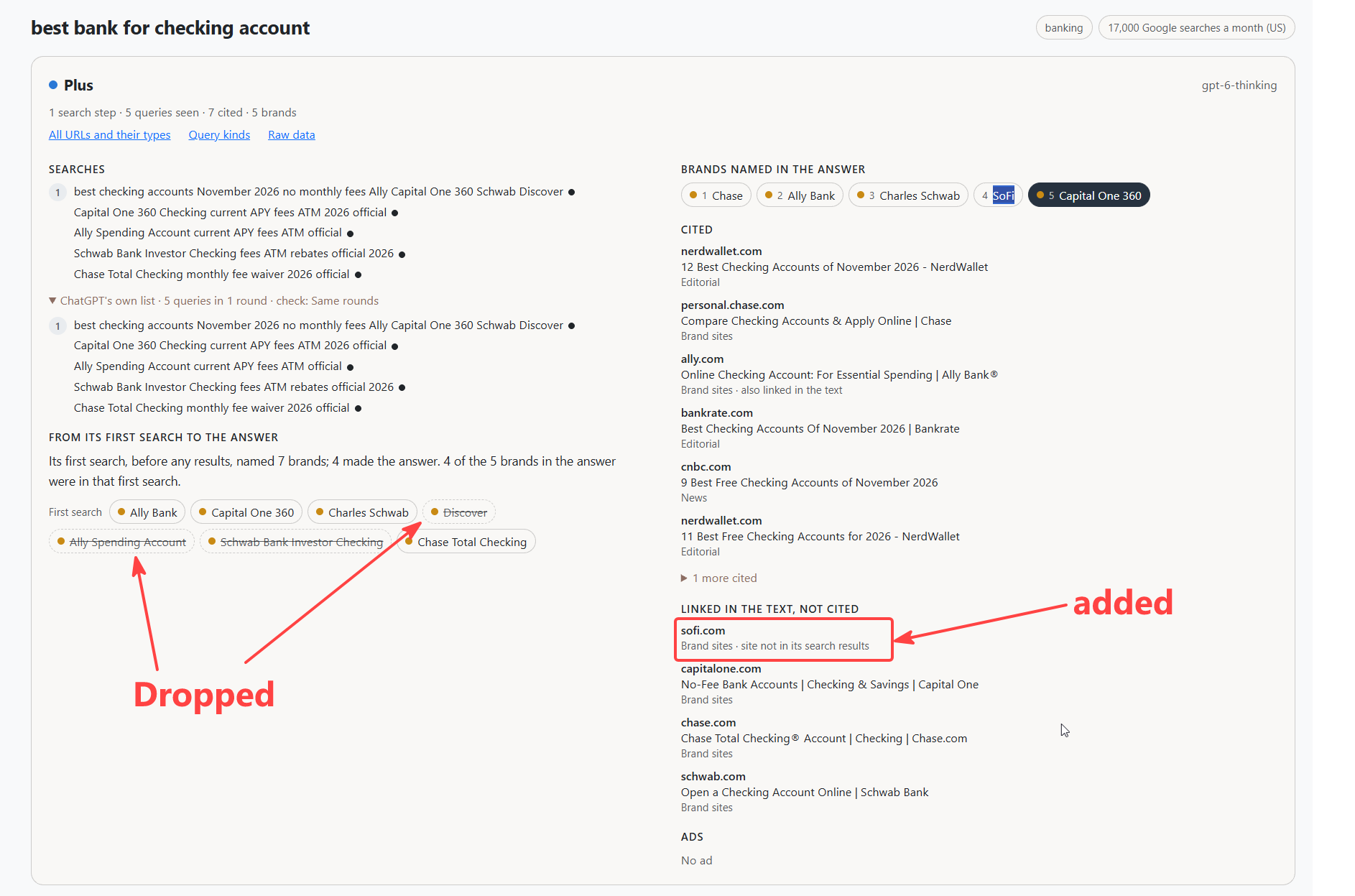
It is hardly a surprise to see the added brand at #1 in the first cited listicle:
So, how to optimize for Free and Plus?
What follows is my inference from the study’s results: a hypothesis yet to be tested.
ChatGPT still relies on listicles, especially for free users. Yes, there is pushback from Google against listicle content at scale, but “best of…” articles do work in ChatGPT.
An accessible brand website with plenty of trust signals, product details and specifications is important for making it into the answer for paid users. Explaining what you do in detail and with proof should also help with “47 variations of that question” from the cited Chris Tweten tweet: ultra-long-tail fan-outs will naturally retrieve you more often. It’s also the lever you fully control.
Each lever’s importance by tier:

The critical part of prompt analysis: check whether the first round of fan-outs names your brand.
If it does, the model knows you. It also knows your competitors, and it goes to the web to verify all of you. Every listicle that mentions a competitor is one more confirmation for them. So don’t hand it out. Publish listicles without them.
There is a shady way to do this and a smart one.
Shady: write “best CRMs” and skip the market leader. That is lying to the reader.
Smart: write “best lesser-known CRMs” and say upfront that the big names are left out on purpose. You are golden2.
The best possible search marketing is when you draw inspiration from gray hat tactics but execute in a creative and honest way.
If your brand hasn’t made it into the model’s knowledge yet, the situation is reversed. Winning in search for a fan-out like “best of… brand1 brand2 brand3” is easier than just “best of…”, so explicitly naming more prominent competitors might help you3.
Note that such a listicle can still compete for shorter “best of…” queries, so you don’t miss the free users. You just increase your chances of reaching the paid ones.
Final note
While these patterns are important, the methodology of analyzing search journeys is way more valuable. If you are serious about doing AEO, take your time to dissect how ChatGPT crafts the answers from search results for a couple dozen prompts in your niche. Look at them through the same lens I used on the examples in this post. Specific tricks go obsolete; the skill remains.
If you’re not sure about your SEO/AEO/GEO/etc. strategy, I can help. I like to analyze new businesses, but I am too lazy to work on one project month after month. So my advice will be a brutally honest analysis, not a retainer pitch. More info here.
Fact lookups in the dataset are overwhelmingly tied to products. We are working with commercial queries here, not quiz show questions, remember?
There is a trade-off: you drop out of the fan-outs that carry the leaders’ names. It is not a problem if you hold a high place on the listicle retrieved instead. If not, you might try to keep all the leaders and give yourself the place you deserve (I am sure you can think of a smart, not a shady way to do so).
Of course such content decisions can’t be based on analyzing just one prompt. You need several at least.