

There is plenty of research aimed at estimating referral traffic from AI tools, as well as comparisons with traditional search. The topic is hot, so the studies are widely cited and quickly become common knowledge.
Here are some points from a November study:
Google is still by far the biggest source of traffic.
AI traffic on sites is still tiny (only around 1%).
ChatGPT sends more traffic than other AI bots combined.
Perplexity is in second place.
Other sources generally confirm these conclusions.
Before we use this data as the basis for a marketing strategy, we need to understand the limitations of such studies. There are two main problems:
At least part of the traffic from every chatbot is technically impossible to attribute. When we use a web analytics platform like GA4, part of referral traffic is lost to direct traffic.
The share of untrackable traffic is different for every chatbot.
What makes visits from chatbots trackable
There are two ways a web analytics system can tie a session to a specific traffic source.
The first is the Referer request header. It is sent from a client (browser) to a server and contains the address of the resource from which the request (click) was sent.
The second is appending utm_source to outbound links.
If neither of these methods is used, the click will be attributed to direct traffic. We can guess about the source, but we have no evidence.
How popular AI chatbots use Referer header and UTM
I conducted a mini-study to find out how different bots handle different types of links.
I asked each chatbot about real estate agencies, their reviews and current market prices to ensure that the answer contains different types of links. Then I clicked on each type of link on the desktop web and then in the mobile app.
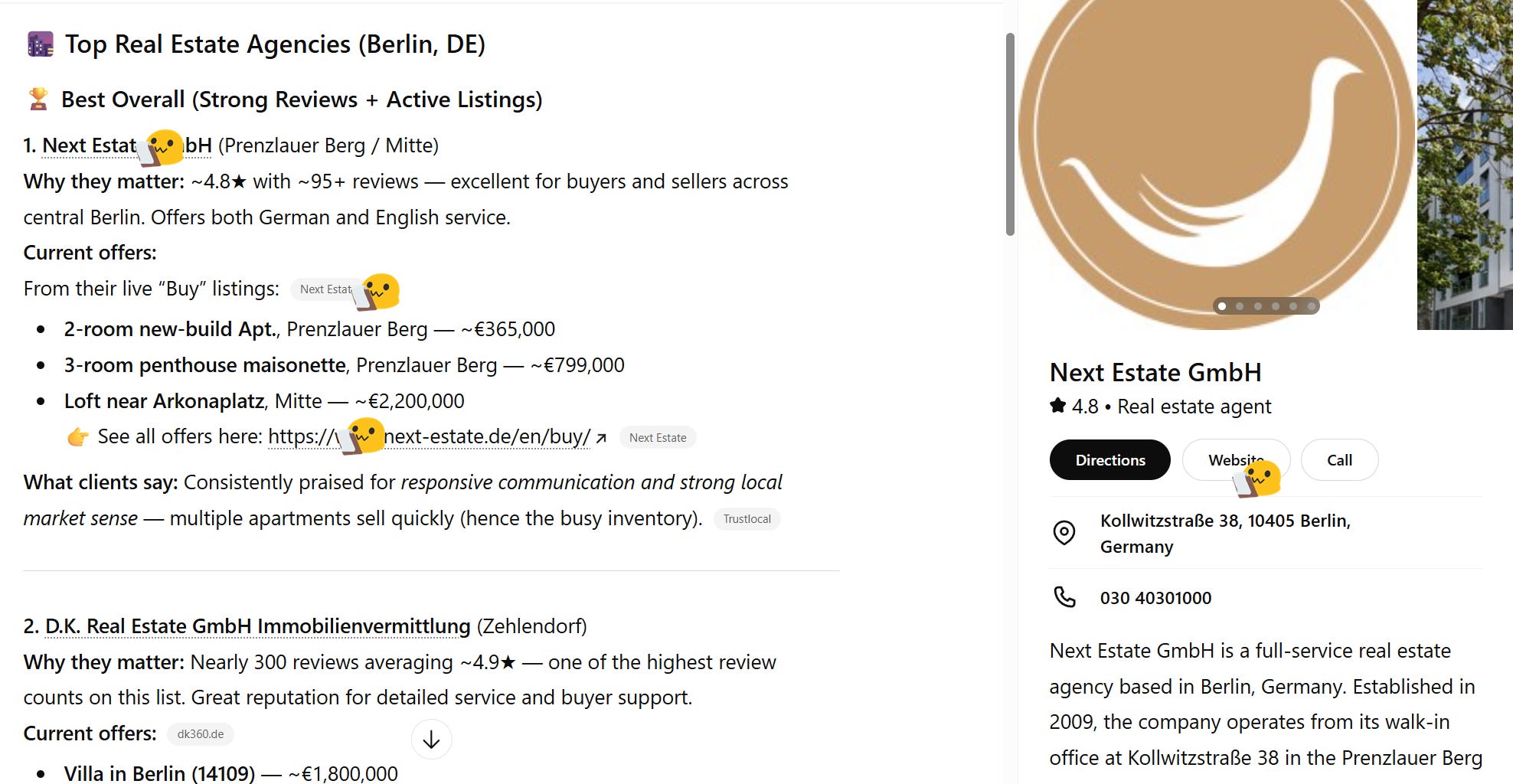
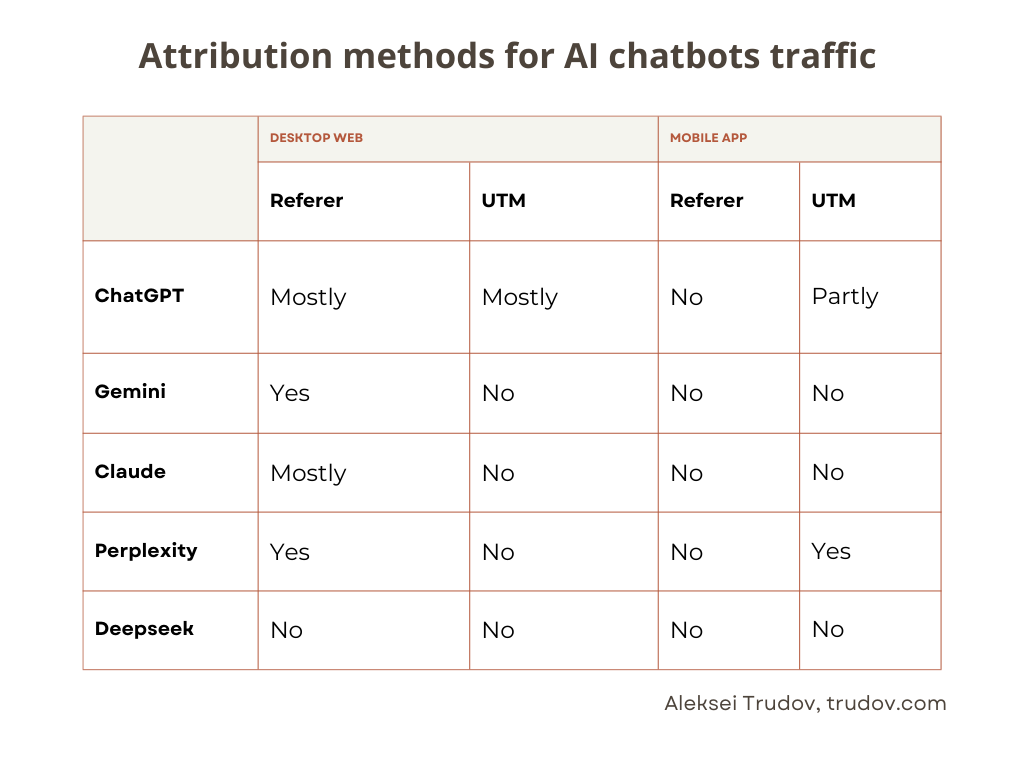
For each case I observed whether the link has UTM and whether a proper Referer was received. The results:
Here is the full log of the study with the details for the each type of links: AI tracking
As you can see, traffic from apps is mostly untrackable. Only ChatGPT and Perplexity use UTM.
Interesting details:
Gemini proxies some links with Google Search, the link with “domain.com” anchor sometimes has “https://www.google.com/search?q=https://www.domain.com” address.
Perplexity is the only chatbot which makes all its referral traffic attributable (Referer on web, UTM on mobile app). It looks like a deliberate policy.
Deepseek does the opposite: absolutely no UTM, referrers are explicitly prohibited by rel=”noreferrer” inside <a> tags.
ChatGPT mostly behaves like Perplexity1, but in some edge cases (for example, clicks on unverified links from a warning popup) it does not use UTM nor Referer.
Conclusions
The real volume of AI traffic is significantly higher than 1%. A big part of mobile AI traffic is being misattributed as direct due to technical limitations and privacy policies of apps.
It is very possible that Gemini, not Perplexity, actually holds a solid second place in referral traffic volume. Gemini has much bigger audience, but its traffic is much less attributable.
Traffic from Claude and Deepseek is also likely underestimated in the studies.
Published AI traffic figures are both low and incomparable across platforms. The same is true for individual reports. The top AI referrer in your GA4 may simply track more reliably than competitors, not actually send more visitors.
P.S. I recently created a tool to make sense of messy GA4 reports for sorting referrers that aren’t hidden: https://io.trudov.com/tools/ga4-attribution-cleaner/
Both Perplexity and ChatGPT have ads placements. An interesting coincidence, right? Demonstrating as much free traffic as possible is a good marketing tactic to attract paid placements.
Thanks for the deepdive Aleksei.